Weight Control: Beyond Willpower; Diets; and Miracle Solutions
Opinion Piece by Ralph Pirozzo
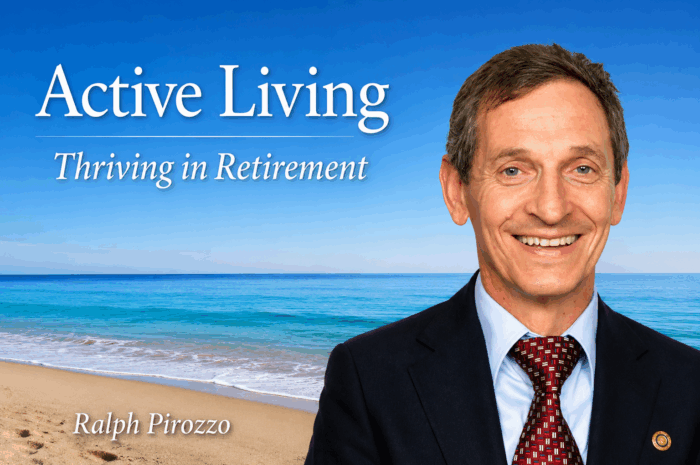
Educator, Health Advocate, and Author of Active Living: Thriving in Retirement
Few modern health issues generate more frustration, confusion, judgement, guilt, commercial exploitation, and emotional pain than weight control.
For decades, society has been flooded with conflicting messages about dieting, obesity, metabolism, exercise, carbohydrates, fats, calories, supplements, appetite suppressants, miracle foods, miracle drinks, miracle programs, and miracle medications.
At various times, entire food groups have been blamed, defended, condemned, rehabilitated, and then blamed all over again.
Meanwhile, millions of people continue to struggle.
Some lose weight only to regain it.
Others follow widely accepted advice carefully and still see little meaningful change.
Many experience not only physical consequences, but also shame, discouragement, judgement, and the exhausting emotional burden that often accompanies long-term weight problems.
In my view, one of the greatest mistakes modern society has made is to treat weight control as though it were simply a matter of willpower.
Human biology is far more complicated than that.
Appetite, satiety, metabolism, energy expenditure, sleep, stress, hormones, medications, ageing, genetics, emotional state, mobility, food availability, social environment, and financial circumstance all interact in extraordinarily complex ways.
Some individuals do everything “right” and still struggle with their weight, while others appear able to eat almost anything without significant consequences.
Sometimes, the apparent unfairness of this reality can be difficult to reconcile, reminding us that biology and chance do not always distribute outcomes equally.
That reality does not mean individuals are powerless.
But it does mean we should approach discussions about weight control with considerably more humility, compassion, and scientific honesty.
This opinion submission forms part of a broader discussion presented in Chapter 6: Lifestyle Modifications from my recently published book Active Living: Thriving in Retirement. Earlier chapters examine centenarians, cancer, cardiovascular disease, Alzheimer’s disease, and Type 2 diabetes, while Chapter 6 explores three interconnected pillars that may influence healthspan — weight control, hormonal balance, and physical activity.
Importantly, these pillars are not presented as miracle solutions, guarantees, or substitutes for appropriate medical care.
Nor are they presented as simplistic formulas capable of overriding genetics, biology, or ageing itself.
Rather, they are explored as interconnected influences that may help support mobility, metabolic health, cardiovascular function, independence, and quality of life during retirement.
Weight control is one part of that broader framework.
And in many ways, it may also be one of the most misunderstood.
Far too often, public discussions about weight focus almost entirely on appearance. And yet, the reality is that physical appearance is often one of the very first things people notice about one another, whether we like that fact or not.
Body image dominates advertising.
Social media amplifies unrealistic expectations.
Commercial industries profit enormously from insecurity.
And many individuals are left feeling that body weight somehow reflects moral virtue, discipline, intelligence, or personal worth.
I reject that way of thinking entirely.
To me, the real importance of weight control has very little to do with vanity.
The issue is not whether someone can fit into a smaller clothing size.
The issue is whether excess weight may contribute to:
- cardiovascular strain • reduced mobility • insulin resistance • chronic inflammation • joint stress • falls • sleep disturbance • reduced independence • and diminished quality of life later in life.
This distinction matters enormously.
Weight control should never become a vehicle for humiliation.
Nor should it become an excuse for cruelty.
Obesity is not a character flaw.
Human physiology is extraordinarily complex.
One of the most important developments in recent decades has been the growing recognition that appetite regulation itself is strongly influenced by hormones.
Hormones such as leptin, ghrelin, insulin, cortisol, melatonin, and glucagon-like peptide-1 (GLP-1) all influence hunger, satiety, metabolism, glucose regulation, energy balance, and fat storage.
This means that weight regulation is not merely psychological.
It is biological.
Sleep deprivation can alter appetite signals.
Chronic stress may influence cortisol levels and eating behaviour.
Highly processed foods may affect satiety.
Ageing alters metabolism and muscle mass.
Physical inactivity changes energy expenditure.
And modern food environments frequently encourage continuous grazing behaviours that human physiology may not have evolved to manage particularly well.
At the same time, we are surrounded by extraordinarily powerful commercial systems specifically designed to increase consumption.
Highly processed foods are often inexpensive, heavily marketed, widely available, emotionally comforting, and engineered to encourage repeated intake.
For many individuals, particularly those under financial pressure, healthier options are not always easy, convenient, affordable, or practical.
These realities matter.
And they help explain why simplistic slogans often fail.
One of the most significant medical developments arising from this growing understanding of metabolism and appetite regulation has been the development of GLP-1 receptor agonists such as semaglutide, marketed under names such as Ozempic and Wegovy.
These medications represent a genuine scientific breakthrough for many individuals living with Type 2 diabetes and obesity.
They deserve recognition and respect.
I am certainly not opposed to them.
In fact, I openly admire the extraordinary scientific effort, clinical research, and medical innovation that made their development possible.
For many people, these medications have helped improve glycaemic control, reduce appetite, support weight reduction, and improve quality of life in ways that previous treatments often failed to achieve.
That progress matters enormously.
At the same time, however, I also believe it is important to remain realistic.
No medication completely abolishes biology.
Even with newer therapies, long-term weight regulation still interacts with food intake, movement, sleep, stress, metabolism, ageing, emotional state, and overall health.
Medicine and lifestyle are therefore best viewed as partners rather than competitors.
For me personally, medications that control my high blood pressure and cholesterol levels are not optional luxuries or theoretical choices. They fundamentally keep me alive. For others, unstable heart rhythms, uncontrolled diabetes, or severe obesity can have devastating consequences, particularly later in life.
For this reason, nothing in this discussion should ever be interpreted as encouragement to stop, reduce, or alter prescribed medications without appropriate medical supervision.
Modern medicine performs extraordinary miracles, and I am the first to openly celebrate its monumental contribution to extending life, reducing suffering, and improving the quality of life of countless individuals throughout the world.
At the same time, I also believe that lifestyle-related factors may still play an important supportive role alongside medical care.
That distinction is extremely important.
Personally, I have always approached weight control from a practical rather than cosmetic perspective.
Since beginning my education consultancy in March 1997, I deliberately incorporated movement into daily life while also remaining extremely selective about what I ate.
Wherever my work took me — Shanghai, Singapore, Auckland, Blackpool, Sydney, or Beijing — I walked regularly and deliberately avoided fast-food outlets despite spending enormous amounts of time in airports, conference centres, taxis, buses, and planes.
If I am being completely honest, whenever I felt I was gaining too much weight, I rarely delivered my lectures with the same confidence, comfort, and sense of self-belief.
This approach was never about trying to project an image of physical perfection.
Nor was it about chasing extreme longevity.
Personally, living longer simply for the sake of extending biological existence has little appeal to me unless those additional years can still be lived with reasonable independence, mobility, dignity, purpose, and meaningful engagement with the world around us.
To me, weight control is best understood within that broader healthspan framework.
Not:
“How thin can I become?”
But rather:
“How well can I continue to function, move, remain independent, and stay engaged with life as I age?”
That is a very different question.
And perhaps a far more important one.
At the same time, I remain deeply aware that weight control becomes progressively more difficult for many people as they age.
Muscle mass may decline.
Metabolism may slow.
Mobility limitations may increase.
Pain, arthritis, cardiovascular disease, medications, depression, stress, sleep disruption, and social isolation may all influence eating behaviour and physical activity.
These realities deserve empathy rather than judgement.
This opinion submission is adapted from Chapter 6: Lifestyle Modifications in Ralph Pirozzo’s recently published book Active Living: Thriving in Retirement. Earlier chapters examine centenarians, cancer, cardiovascular disease, Alzheimer’s disease, and Type 2 diabetes, while Chapter 6 explores the interconnected roles of weight control, hormonal balance, and physical activity in supporting healthspan, independence, and quality of life during retirement.
Ralph Pirozzo is a former respiratory technologist at Toronto General Hospital in Ontario, Canada, a senior Biology teacher, and an international education consultant who has worked across Australia, China, New Zealand, Singapore, and the United Kingdom.
Disclaimer:
*This opinion piece is intended for general educational and reflective discussion only and should not be interpreted as personalised medical advice, diagnosis, or treatment. Readers should always consult qualified healthcare professionals regarding their individual medical circumstances, medications, exercise programs, dietary changes, or health concerns.
**Cover image adapted from original materials provided by Ralph Pirozzo. AI tools were used to create the final composite image.